Every traditional katana functions as a remarkable work of art, but consider if you desire to communicate your individual approach? Refining your sword is a insightful journey, allowing you to forge a truly rare piece. From the tsuka wrapping and clasp to the plate design and edge design, each constituent offers a chance for custom touch. This inquiry delves into the area of katana modifications, providing facts for both newcomers and expert enthusiasts hoping to create their trace on the heritage art of the samurai.
Entry-Level Certified Fabrication
For people ready to embark on the advantageous journey of katana handling skills , 1060 steel katanas bring an superb entry point. This distinct grade of basic steel obtains a sweet spot between cost and capability . While not reaching hard as supreme steels, 1060 allows for a workable level of blade refinement , making it tailored to trainees to enhance the groundwork of blade care and admire the charm of original Japanese weaponry. It’s a superb choice for fostering experience without the fiscal burden of more elite steels.
T Gear Steel Weapons : Optimizing Excellence and Reasonableness
Satisfying devotees seeking an authentic armament experience without overwhelming the capital constraint , T10 fabrication katanas represent a inviting option. These instruments offer a substantial improvement in strength compared to budget alternatives, exhibiting fair edge retention and suitable flexibility for introductory cutting techniques. While not rivaling the exquisite characteristics of ultimate steels like T100 or folded substance , T10 provides a distinguished blend of utility and affordability , making them a popular choice for trainees and those on a controlled earnings .
Transcending the Edge : Enhancing Your Edge's Components and Grip
As the finished sword is undeniably the central point of a katana, truly enriching its appeal lies in the thoughtful customization of its fittings and haft . This procedure allows individuals to manifest their individual style . Review the broad possibilities: menuki - decorative appliqués that bring visual interest ; the hamon protective covers – often carefully engraved ; the tsuka center itself, wrapped in traditional ito twine ; and the fusa terminal , which can be crafted from various ingredients like precious metals or cartilage .
- Opt for ideas that align with you.
- Evaluate with diverse composites .
- Focus on robustness for a long-term result .
The Magnetism of the Katana: Background, Fabrication, and Iron
Every samurai blade features a special allure, steeped in periods of Pacific Rim history and custom . More than merely a device of skirmishing, it's a representation of the knight ethos – a fusion of competence and discipline . Its advancement spanned countless generations, with early blades evolving into the refined curvature and dangerous edge we accept today. The craftsmanship involved is truly astounding , requiring ages of instruction to complete. The process involves a intricate folding of refined metal , creating layers that reinforce the instrument’s flexibility and cutting ability. Multiple schools of blacksmithing appeared , each with their special secrets and formulas for achieving the ideal equilibrium and edge - a truly demanding pursuit.
- Primary Katana varieties
- The responsibility of the historical weapon in soldier culture
- Established smithing methods
Deciding the Best Steel for Your Japanese Sword Project: 1060 vs. T10
Deciding on the suitable steel is remarkably important for any blade project, and the selection between 1060 and T10 can be challenging. 1060 is a widely used American alloy, offering a decent balance of strength and resilience, allowing it relatively easy to condition. However, T10, a Asian steel, habitually boasts amplified wear fortitude and can likely achieve a increased peak hardness, although it can be somewhat demanding to work with and requires refined heat forging. Consider your competency and targeted characteristics: for a beginner, 1060 may be a prudent platform, while the veteran smith might seek the extra merits of T10.
- User-friendliness of Applying
- Abrasion
- Ultimate Toughness
Unlocking the Potential: Advanced Katana Customization Techniques
Mastering the art of katana refinement extends far beyond basic buffing. Serious smiths are now researching advanced techniques to truly unleash a blade's hidden potential. This involves intricate work with the temper rim, utilizing specialized elements for differential hardening and carefully electing the shape of the crossguard to optimize balance and efficiency. Beyond purely functional adjustments, artisans are increasingly focused on developing unparalleled aesthetic grace, through complex decorating and layered polishes that truly transform a katana into a exquisite object.
From Raw Steel to Masterpiece: Crafting a 1060 Katana
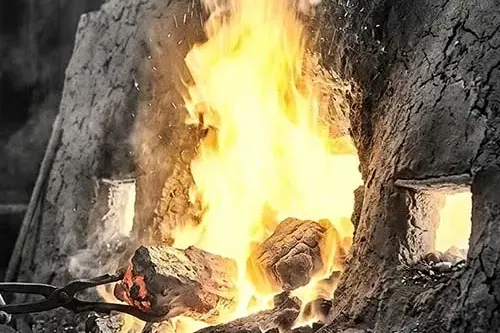
The journey opens with ordinary 1060 compound , a tough material far separated the refined katana it will turn into . Skilled bladesmiths practice a complex process of doubling and constructing the base steel, repeatedly tempering it and pounding it to clear impurities and create a steady grain structure. This arduous process, often enduring for cycles, builds the essential hardness and flexibility characteristic of a real Japanese edge . Additional heat procedures , including methodical katana hardening and tempering , are essential to achieve the targeted balance of sharpness, life and charm .- Overlaying: Reduces impurities and forms grain structure.
- Hammering: Creates the steel into the initial blade form.
- Heat Treatment: Defines the final hardness and flexibility.
The Lasting Drawing of the Katana: An In-Depth Look at Metal and Personalization
This venerable katana holds present a compelling symbol of Japanese heritage , its fascination far exceeding mere armaments . Forged from rare steel and habitually featuring intricate trims, the process of creation itself is a sacred art. Beyond the basic craftsmanship, the ability to customize a katana - from the blade pattern to the handle wrapping and guard - permits for a authentically individual manifestation for both devotees and handlers alike. This mixture of age-old steelwork and boundless personalization causes the katana's continued renown across the sphere .